
Balestier Market set for makeover with new dining, retail options, modern wet market
SLA has awarded the tender of the state property at 411 Balestier Road to Hua Hng Trading.
Published Nov 25, 2026, 02:35 PM
Updated Nov 26, 2026, 07:02 PM
Singapore Land Authority has awarded Balestier Market’s tender to Hua Hng Trading for a major makeover with new dining, retail and grocer spaces.
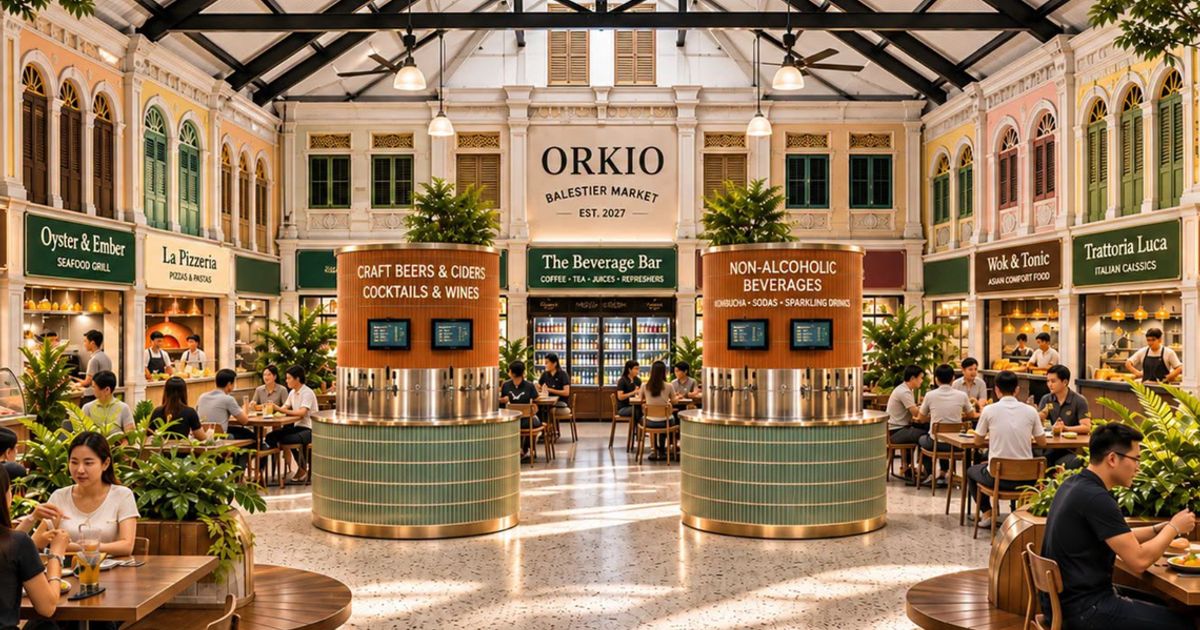
The updated market will have a central dining hall, self-service beverage stations, an outdoor refreshment area and shops selling fresh produce.
SLA also plans events to celebrate the area’s history, while keeping links to Balestier Market’s 1922 roots as Or Kio Pa Sat, or Black Bridge Market.
SINGAPORE – Regular patrons of Balestier Market can look forward to a modern take on the popular food centre after an upcoming makeover to the century-old property.
In a Facebook post on Nov 24, the Singapore Land Authority (SLA) announced that it had awarded the tender of the state property at 411 Balestier Road to Hua Hng Trading.
The new five-year-tenure, with an option to extend for another four years, will start after the current tenancy expires in April 2027, the SLA said on Nov 26 in response to media queries.
In its Nov 24 Facebook post, SLA said there are plans to add diverse food and beverage and retail offerings, including “a modern take on the traditional wet market through a grocer space”.
The new market will include a central dining hall, self-service beverage stations and shops that offer fresh produce, said SLA.
“Beyond dining and shopping, regular events celebrating the precinct’s history and identity are also planned, creating more opportunities for residents within the precinct and visitors to come together,” it added.
In its media reply to The Straits Times, SLA added that beyond F&B, the space can also be used for offices, a fitness centre and an outdoor refreshment area, capped at 100sqm.
“This is intended to support a wider range of concepts and contribute to the revitalisation of the Balestier precinct,” said the spokesperson.
In concept images from Hua Hng Trading in the Facebook post, the dining area is reminiscent of old shophouses, with hawker stalls located below shophouse windows. Two beverage stations can be seen in the middle of the dining area, serving alcoholic and non-alcoholic beverages.
A different image shows mock-ups of stall concepts, such as one selling fruits and another selling seafood.
In another image, the word “orkio” is seen above a black bridge, in a reference to the market’s history.
There are currently five sub-tenants at the market, and the award of the tender to Hua Hng Trading does not affect the current tenancy agreement, SLA said in the media reply.
The existing tenants were informed of the final tenancy expiry in April 2025 and that Hua Hng Trading will determine the next group of sub-tenants.
“This may include existing operators who are interested in returning and whose concepts are aligned with the plans for the site,” added the spokesperson.
Existing operators who want to continue running their cooked food stalls may also contact the National Environment Agency for information on stalls available through its monthly tenders and at hawker centres managed by NEA-appointed operators, said the spokesperson.
The market is on state property, which was conserved in 2003 and Hua Hng Trading, as the incoming master tenant, must revitalise the place “in close consultation with the relevant agencies, and in accordance with conservation guidelines”, SLA said.
An Urban Redevelopment Authority (URA) spokesperson said in a separate media reply on Nov 26 that it will assess detailed proposals when submitted.
The spokesperson added: “Any proposed additions and alterations will need to comply with the prevailing planning and conservation requirements, including the retention of the building’s key conserved features, such as the original pitched roof, structural grid and spatial quality of an open-sided market.”
Balestier Market was established in 1922 and was known as Or Kio Pa Sat (Black Bridge Market), after a nearby black wooden bridge, as well as Tee Pa Sat (Iron Market), after the metal fence that once surrounded it, SLA said in the Facebook post.
According to the URA’s website, the market was built for local farmers to sell their produce.
During World War II, it served as a centre for distributing food rations to people in the area.
It was later revamped as a 24-hour food centre, said the URA website.
Singapore Land Authority